Yevgeny Aleksandrovich Yevtushenko[1] (born 18 July 1933) is a
Soviet and Russian poet. He is also a novelist, essayist, dramatist, screenwriter, actor, editor, and a director of several films.
Nice poem of Yevgeny Aleksandrovich Yevtushenko is on this address:
You can copy many nice books on this address too:
Early life
Yevtushenko was born Yevgeny Aleksandrovich Gangnus (later he took his mother's last name, Yevtushenko) in the Irkutsk region of Siberia in a small town called Zima Junction[2][3][4] on 18 July 1933 to a peasant family of mixed Russian, Ukrainian and Tatar heritage.[5] "His great-grandfather, Joseph Yevtushenko, a suspected subversive, was exiled to Siberia after the 1881 assassination of Emperor Alexander II and died en route. Both of Yevtushenko's grandfathers were arrested during Stalin's purges as "enemies of the people" in 1937."[6] His maternal grandfather, Ermolai Naumovich Yevtushenko, had been a Red Army officer during the Russian Revolution and the Civil War. Yevtushenko's father, Aleksandr Rudolfovich Gangnus, was a geologist, as was his mother, Zinaida Ermolaevna Yevtushenko, who later became a singer. The boy accompanied his father on geological expeditions to Kazakhstan in 1948, and to Altai, Siberia, in 1950. Young Yevtushenko wrote his first verses and humorous chastushki while living in Zima, Siberia. "His parents were divorced when [he] was 7 and he was raised by his mother."[6] "By age 10 he had cranked out his first poem. Six years later a sports journal was the first periodical to publish his poetry. At 19, he published his first book of poems, The Prospects of the Future."[6]
After the Second World War, Yevtushenko moved to Moscow. From 1951–1954 he studied at the
Gorky Institute of Literature in Moscow, from which he dropped out. He published his first poem in 1949 and his first book three years later. In 1952 he joined the
Union of Soviet Writers after publication of his first collection of poetry. His early poem
So mnoyu chto-to proiskhodit (
Something is happening to me) became a very popular song, performed by actor-songwriter
Aleksandr Dolsky. In 1955 Yevtushenko wrote a poem about the Soviet borders being an obstacle in his life. His first important publication was the poem
Stanciya Zima (
Zima Station 1956). In 1957, he was expelled from the Literary Institute for "individualism". He was banned from traveling, but gained wide popularity with the Russian public. His early work also drew praise from the likes of
Boris Pasternak,
Carl Sandburg and
Robert Frost.
[7][8]

Yevtushenko on Amazon River. 1968.
[edit]During the Khrushchev Thaw
Yevtushenko was one of the authors politically active during the
Khrushchev Thaw (Khrushchev declared a cultural "Thaw" that allowed some freedom of expression). In 1961 he wrote what would become perhaps his most famous poem,
Babiyy Yar, in which he denounced the
Soviet distortion of historical fact regarding the
Nazi massacre of the Jewish population of
Kiev in September 1941, as well as the
anti-Semitism still widespread in the Soviet Union. The usual Soviet policy in relation to
the Holocaust in Russia was to describe it as atrocities against Soviet citizens, and to avoid mentioning that it was a
genocide specifically of the Jews. Therefore, Yevtushenko's work
Babi Yar was quite controversial and
politically incorrect, "for it spoke not only of the Nazi atrocities, but the Soviet government's own persecution of Jewish people."
[9] Following a centuries-old Russian tradition, Yevtushenko became a
public poet. The poem achieved widespread circulation in the underground
samizdat press, and later was set to music, together with four other Yevtushenko poems, by
Dmitri Shostakovich in his
Thirteenth Symphony, subtitled
Babi Yar. Publication of the poem in the state-controlled Soviet press was delayed until 1984. Reportedly, the poem "was published abroad and appeared in clandestine fashion in the Soviet Union."
[10]Alternatively, some note that the poem was published in a major newspaper "
Literaturnaya Gazeta"
[11] and achieved widespread circulation in numerous copies. Of Yevtushenko’s work, Shostakovich has said, “Morality is a sister of conscience. And perhaps God is with Yevtushenko when he speaks of conscience. Every morning, in place of prayers, I reread or repeat by memory two poems by Yevtushenko: ‘Career’ or ‘Boots.’”
[7]
In 1961, Yevtushenko also published
Nasledniki Stalina (
The Heirs of Stalin), in which he stated that although Stalin was dead,
Stalinism and its legacy still dominated the country; in the poem he also directly addressed the Soviet government, imploring them to make sure that Stalin would "never rise again". Published originally in
Pravda, the poem was not republished until a quarter of a century later, in the times of the comparatively liberal party leader
Mikhail Gorbachev.
Yevtushenko became one of the best known poets of the 1950s and 1960s in the Soviet Union.
[12] He was part of the 1960s generation, which included such writers as
Vasili Aksyonov,
Andrei Voznesensky,
Bella Akhmadulina,
Robert Rozhdestvensky; as well as actors
Andrei Mironov,
Aleksandr Zbruyev,
Natalya Fateyeva, and many others. During the time,
Anna Akhmatova, a number of whose family members suffered under the communist rule, criticised Yevtushenko's aesthetic ideals and his poetics. The late Russian poet Victor Krivulin quotes her saying that "Yevtushenko doesn't rise above an average newspaper satirist's level. Yevtushenko and
Andrei Voznesensky's works just don't do it for me, therefore neither of them exists for me as a poet."
[13]
Alternatively, Yevtushenko was much respected by others at the time both for his poetry and his political stance toward the Soviet government. "Dissident
Pavel Litvinov had said that '[Yevtushenko] expressed what my generation felt. Then we left him behind.'"
[6] Between 1963 until 1965, for example, Yevtushenko, already an internationally recognised littérateur, was banned from traveling outside the Soviet Union.
[14]
Generally, however, Yevtushenko was still the most extensively travelled Soviet poet, possessing an amazing capability to balance between moderate criticism of Soviet regime, which gained him popularity in the West, and, as noted by some, a strong Marxist-Leninist ideological stance,
[6] which allegedly proved his loyalty to Soviet authorities.
At that time KGB Chairman
Vladimir Semichastny and the next KGB Chairman
Yuri Andropov reported to the Communist Politburo on the "Anti-Soviet activity of poet Yevtushenko." Nevertheless, some nicknamed Yevtushenko "Zhenya Gapon," comparing him to Father
George Gapon,
[15] a Russian priest who at the time of the Revolution of 1905 was both a leader of rebellious workers and a
secret police agent.

President Nixon meets with Russian poet Evheny Evtushenko. 1972.
[edit]Controversy
Nevertheless, "when, in 1987, Yevtushenko was made an honorary member of the
American Academy of Arts and Letters, Brodsky himself led a flurry of protest, accusing Yevtushenko of duplicity and claiming that Yevtushenko's criticism of the Soviet Union was launched only in the directions approved by the
Party and that he criticised what was acceptable to the Kremlin, when it was acceptable to the Kremlin, while soaking up adulation and honours as a fearless voice of dissent."
[14] Further, of note is "Yevtushenko's protest of the trial of
Andrei Sinyavsky and
Yuli Daniel, an event now credited with inaugurating the modern dissident movement and readying the national pulse for perestroika. Both writers had toiled under pseudonyms and stood accused, in 1966, of "anti-Soviet activity" for the views espoused by their fictional characters. But Yevtushenko's actual position was that the writers were guilty, only punished too severely."
[17] "Yevtushenko was not among the authors of the "Letter of the 63" who protested [their convictions]."
[6]
Moreover, "when Yevtushenko was nominated for the poetry chair at Oxford in 1968,
Kingsley Amis,
Bernard Levin, and the Russian-Hungarian historian
Tibor Szamuely led the campaign against him, arguing that he had made life difficult for his fellow Soviet writers."
[17]
This is dedicatory inscriptions of Yevgeny Yevtushenko to me (Igor Timofeev).
"To my friend Igor Timofeev on 15 January 2013. Yevgeny Yevtushenko".
This is dedicatory inscriptions of Yevgeny Yevtushenko to my 10 years old grandson Anton Outkine.
" Anton friendly wishes for growth as a poet.Yevgeny Yevtushenko on 15 January 2013".
This is dedicatory inscriptions of Yevgeny Yevtushenko to my 6 years old grandson Ivan Outkine.
" To Ivan to fulfill of his greatest desire.Yevgeny Yevtushenko on 15 January 2013".
This is dedicatory inscriptions of Yevgeny Yevtushenko to my 6 years old grandson Egor timofeev.
" The wishes of good luck to Egor.Yevgeny Yevtushenko on 15 January 2013".
This is dedicatory inscriptions of Yevgeny Yevtushenko to my 6 years old grandson Grisha Timofeev in Russian:
"Грише Тимофееву от твоего друга - автора".
"Yevgeny Yevtushenko on 15 January 2013".
This is dedicatory inscriptions of Yevgeny Yevtushenko to my 2 years old grandson Tim Timofeev in Russian:
"Тиму Тимофееву - от души всему вашему клану".
" Yevgeny Yevtushenko on 15 January 2013".
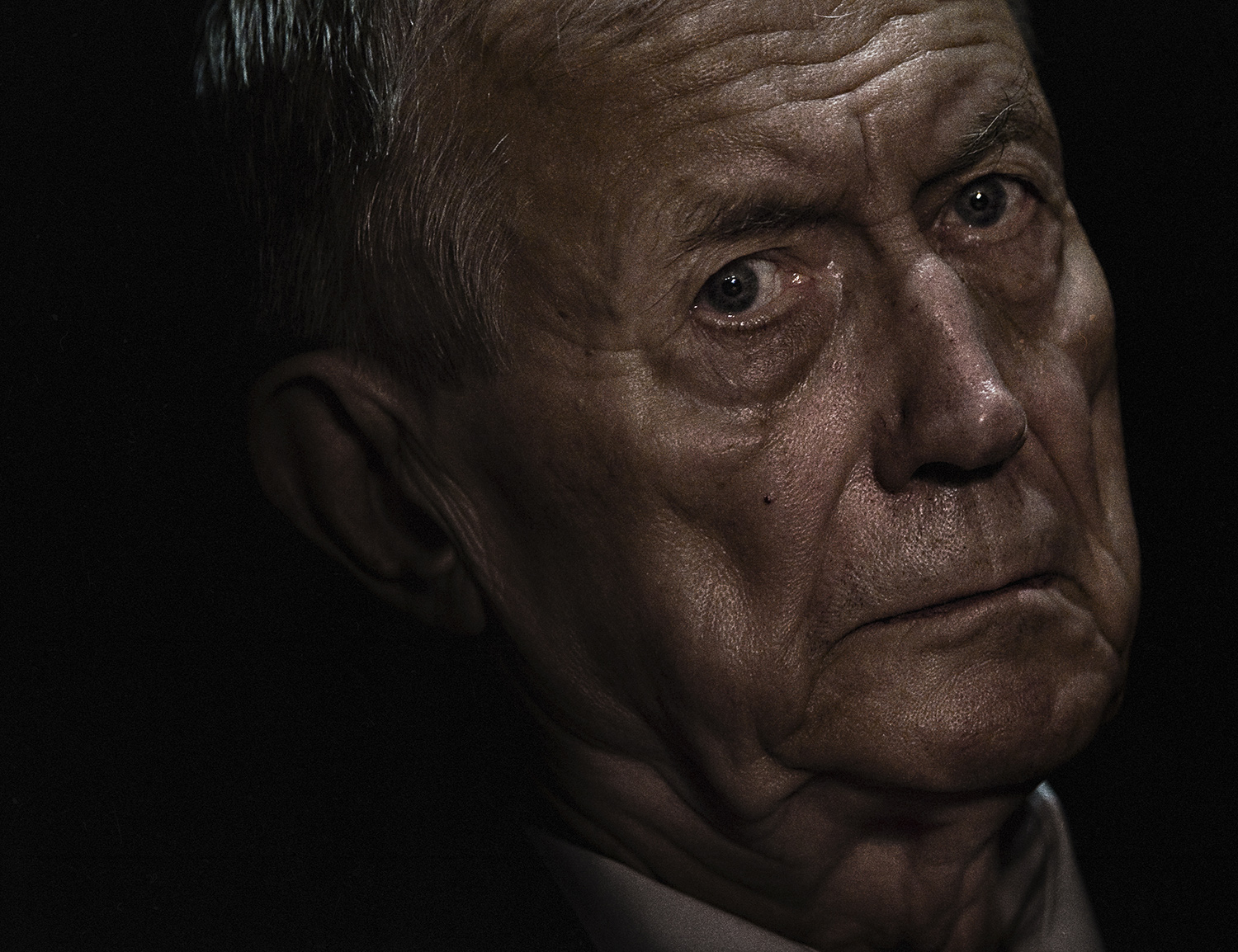
Евгений Евтушенко был госпитализирован в пятницу, 31 марта 2017.
https://www.gazeta.ru/culture/2017/04/01/a_10606649.shtml#page2
Его супруга Мария Новикова рассказала ТАСС, что это было не плановое обследование, а состояние Евтушенко оценивалось как тяжелое. О смерти поэта сообщил в субботу его друг Михаил Моргулис. «Пять минут назад Евгений Александрович отошел в вечность», - приводит агентство его слова.
Евгений Евтушенко — это целая эпоха в российской культуре.
Он родился в 1932 году на станции Зима в Иркутской области в семье геолога; по свидетельству родителей, уже с детства писал стихи, рано научился читать — и пользовался этим, чтобы читать ту литературу, которая была предназначена для более взрослых («В моей голове был невообразимый винегрет. Я жил в иллюзорном мире, не замечал никого и ничего вокруг», — вспоминал он). Но и публиковаться Евтушенко стал рано — первые его стихи появились в газете «Советский спорт», когда ему было 17 лет.
Через три года появился и первый сборник стихов — «Разведчики грядущего», но сам поэт считал своим настоящим дебютом свою третью книгу «Шоссе энтузиастов» (1956, второй сборник — «Третий снег» — был издан в 1955-м). Буквально следом появились сборник «Обещание» (1957) и поэма «Станция Зима», которую он писал на протяжении четырех лет.
К тому времен относится и первое его выступление «против линии партии» — в 1957-м за защиту романа В. Дудинцева «Не хлебом единым» он был исключен из Литературного института.
Всемирную известность ему принесло стихотворение «Бабий Яр», написанное в 1961 году по следам поездки с писателем Анатолием Кузнецовым — оно было переведено на 72 языка мира.
«Над Бабьим Яром памятников нет\Крутой обрыв, как грубое надгробье\Мне страшно.\Мне сегодня столько лет,\ как самому еврейскому народу». Правда, самому Евтушенко, наоборот, это стихотворение принесло одни проблемы - его обвинили в «выпячивании трагедии» еврейского народа по сравнению с другими. Стихотворение, будто фильм, «положили на полку - в СССР оно вышло только в 1983 году, затерянное в трехтомнике уже знаменитого поэта.
Евтушенко с детства вращался в кругах людей искусства — благодаря своей матери, солистке театра имени К.С. Станиславского. В 50-е он сам стал таким «кругом», войдя в число тех, кого позже назовут «шестидесятниками» и кто определял новый подход к творчеству — по времени формирование этого круга совпало с хрущевской оттепелью. Но и после сворачивания вроде бы начавшихся реформ страны изменения в культуре остались — и Евтушенко был одним из их проводников. И если странное выражение «совесть эпохи» имеет какое-то человеческое воплощение, то ею в оттепельные и застойные годы был Евтушенко. Причем, кажется, никому это особенно не нравилось --
одни пеняли ему за «обласканность» властью, а другие — за то, что благодаря этой обласканности он может позволить себе быть более честным человеком, чем среднестатический гуманитарий.
Любопытно, что он всегда был в оппозиции — и почти всегда считался поэтом государственного уровня. Евтушенко выступал против ввода войск в Чехословакию »» писал письма в защиту диссидентов, но одновременно объездил с гастролями всю страну и даже выезжал за рубеж. В США молодого Боба Дилана сравнивали с уже матерым советским поэтом, который (как теперь, после рассекречивания архивов, стало известно) уже в 1963-м, в возрасте 30 лет, номинировался на Нобелевскую премию.
С распадом СССР для Евтушенко словно закончилась та страна, в которой он жил и работал. В 1991-м он получил работу в одном из американских университетов и перебрался вместе с семьей в США. Правда, регулярно возвращался в Россию — чтобы выступить перед своими поклонниками (его концерты всегда проходили с неизменным аншлагом) или
получить государственную награду (в 2010-м он стал лауреатом Госпремии России).
Евгений Евтушенко так и не получил Нобелевку по литературе — на которую выдвигался регулярно, хотя никогда не входил в число фаворитов; но фаворитом не был и Боб Дилан, ставший лауреатом-2016. А Евтушенко уже остался в памяти — благодаря своим стихам, в которых есть и вопросы («Хотят ли русские войны?») и ответы («Поэт в России больше, чем поэт»).


